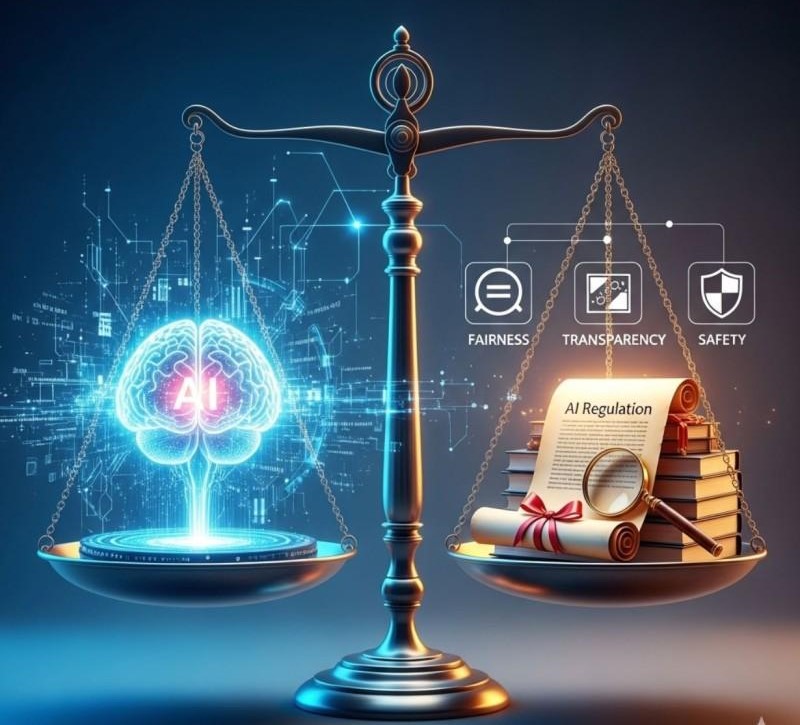
Nigeria, like most countries around the world, is moving towards regulating the use of Artificial Intelligence (AI). The rapid rise of AI as an emerging frontier technology has compelled governments to consider bringing it under regulation.
A 2025 report by the United Nations Conference on Trade and Development (UNCTAD) projected that the value of the global AI market would soar from $183 million in 2023 to $4.8 trillion by 2033. UNCTAD established that AI innovations are already reshaping many industries, including content creation, coding, trading, product design, and customer service.
Meanwhile, eyeing the projected growth, Nigeria is aiming to become a continental leader in the AI sector by establishing a regulatory framework to encourage responsible usage. In April 2026, the National Information Technology Development Agency (NITDA) hinted that the West African country is nearing full implementation of a regulatory framework for artificial intelligence.
According to reports, the agency stated that the regulation will ensure responsible usage of artificial intelligence, which indicates some restrictions for users, including Nigerian businesses. Further, the revelation highlighted plans for data classification to ensure clean and reliable datasets to train AI systems effectively.
Without a doubt, NITDA’s statement is clear that AI regulations are here already, but emphasis on data clarification and responsible use of artificial intelligence indicates a strict regulatory regime. Therefore, it is important for Nigerian businesses that have incorporated or rely on AI solutions to prepare for the regulation.
What Businesses Must Do Before Nigeria Introduces AI Regulations
Transitioning into regulatory regimes can be testing, but conducting a pre-compliance checklist can help businesses to mitigate some of the risks. Business owners must cross-check if their deployment of AI solutions is in line with existing regulations.
The Nigerian AI sector may lack clear regulatory guidelines, but it is not entirely in a grey area. The Nigeria Data Protection Act (NDPA) 2023 is an existing regulatory standard that is concentrated on data privacy in the country.
Thanks to the NDPA Act, organizations processing personal data through artificial intelligence must establish a lawful basis. Furthermore, the Act prevents businesses from using AI to automate users’ rights that may trigger legal consequences.
More so, the NDPA Act will help form a part of the National Artificial Intelligence Strategy (NAIS), pointing to the need for Nigerian businesses to check if their AI usage doesn’t violate any of its existing structure. Also, the Director-General of NITDA, Kashifu Inuwa, mentioned that AI regulation will commit to establishing ethical guidelines and safeguards.
For a smooth transition to the regulatory regime, business owners should ensure that customers’ interaction with AI solutions on their platform does not come at the expense of their data. Failure to properly protect users’ data will incur serious sanctions against businesses under the new AI regulatory framework.
Implementing policies to encourage responsible use of AI among staff is another key step that can put businesses in a good position ahead of the introduction of artificial intelligence regulation in Nigeria.
It is important to note that the new guidelines may put some AI solutions on the blacklist due to their functions. Therefore, it is imperative for business establishments to only consider artificial intelligence platforms with features that conform to the guidelines.
Why ChatGPT May Be Risky For Businesses
Another major concern ahead of the introduction of the regulations is the overreliance on AI solutions by Nigerian businesses. ChatGPT is a common artificial intelligence tool among corporate establishments; despite solving numerous problems through automation, the solution still comes with risks.
ChatGPT is one of the few AI solutions that offer free features, leading to its popularity among businesses for drafting proposals, marketing strategy, branding, and writing. To an extent, the artificial intelligence tool can help improve productivity and boost sales, but it has limitations which business should understand.
At times, ChatGPT can provide inaccurate figures, misleading technical details, infeasible strategies, and code with serious vulnerabilities. So, overreliance on the artificial intelligence tool sometimes prevents business establishments from having a genuine facelift.
Without a careful approach, ChatGPT can produce materials similar to existing work protected by copyrights. Business owners can run into serious trouble if they fail to review ownership and licensing of the AI-generated content.
The tool, without proper supervision, can generate content with offensive language and factual errors. These materials can damage the reputation of a business if they reach a wide audience.
One major flaw of ChatGPT that every business owner should take note of is inconsistency in some of its responses across sessions. Due to that, it will be difficult to put in place a proper standardisation and sustainable strategy for a business.
Without a doubt, the regulation will encourage the use of AI, a proposition UNCTAD backed in a recent report. Nevertheless, businesses need to put their use of AI innovations under serious check to avoid risks of overreliance and ensure responsible deployment.
About the Author